AI automation is the practice of using agentic AI - AI agents that decide and act on their own - to run business processes end to end. Clevotics builds multi-agent orchestration, MCP-connected agents, voice AI, and digital workforce systems that reach production instead of stalling in pilots.
Agentic AI automation,built to reach production
Clevotics builds AI automation that runs on agentic AI - AI agents that decide and act across your tools, not scripts that break on the first change. Multi-agent orchestration, MCP-connected integration, voice AI, and a digital workforce that ships past the pilot stage.
Autonomous operation
24/7
No shifts, no downtime
Avg. cost reduction
75%
On automated workflows
Processes automated
500+
Across client operations
Reach production
9 in 10
Of our agent builds ship
What we build
Agentic AI automation across the capabilities that matter in 2026 - from orchestration and MCP integration to voice AI and governance.
Multi-agent orchestration
An orchestrator agent that directs specialist agents in parallel, so complex work no longer has to fit inside a single model. The dominant 2026 pattern, built to your process.
MCP & tool integration
We connect agents to the tools you already run through the Model Context Protocol (MCP) and A2A - the standard layer that lets an AI agent read, act, and hand off across your stack.
Voice AI agents
AI voice agents that handle inbound and outbound calls - qualification, booking, verification, and support - resolving hundreds of conversations at once instead of leaving callers on hold.
Digital workforce & AI employees
Agents that own a role end to end - support, scheduling, data entry, reporting - and complement your team without adding headcount. Your silicon-based workforce, supervised by humans.
Autonomous process automation
Beyond brittle RPA scripts. Agents read intent and context, decide the next step, and adapt when a workflow changes - so automation survives the day your form layout moves.
Conversational AI
Always-on agents across WhatsApp, Instagram, Messenger, and web chat that read intent and reply in context - with a clean handoff to a human the moment a conversation needs one.
AI governance & oversight
Bounded autonomy by design: approval gates, audit trails, and human-in-the-loop checkpoints so agents act within defined limits. Governance built in from day one, not bolted on.
AI strategy & consulting
Where agents pay off first, which processes to automate, and how to get from pilot to production. Roadmap, model selection, and build - the part where 6 in 10 pilots stall, handled.
The 2026 pattern
Multi-agent orchestration, not one overloaded bot
Complex work exceeds what any single AI model can hold in context. So we build the way modern teams are structured: an orchestrator agent that plans the work and routes each step to a specialist agent, all connected to your tools through MCP.
Gartner logged a 1,445% surge in multi-agent system inquiries in a single year. This is where enterprise automation is heading - and where we build.
Orchestrator
Reads the goal, plans the work, and routes each step to the right specialist agent.
Specialist agents
Focused agents - retrieval, drafting, verification - running in parallel on their piece.
MCP tool layer
A standard connection to your CRM, help desk, database, and payment tools. The USB-C of AI.
Human oversight
Approval gates and audit trails so the system acts within the boundaries you set.
Your digital workforce
AI employees that complement your team
Think of agents as a silicon-based workforce - each one owning a role end to end, supervised by humans rather than replacing them. Support, scheduling, data entry, reporting, and outreach, scaled without adding headcount.
85%
Response time reduction
75%
Cost savings on automated work
94%
Customer satisfaction
300%
Engagement increase
Beyond RPA and basic chatbots
The difference between automation that breaks on the first change and automation that adapts to it.
Traditional RPA & basic chatbots
- Follows a fixed script, step by step
- Breaks when a form, page, or field moves
- Escalates anything outside its rules
- One task, one bot, no coordination
Agentic AI automation
- Reads intent and decides the next action
- Adapts when the workflow changes
- Handles edge cases, escalates only when needed
- Orchestrated agents that hand work off to each other
How we work
A path built to clear the gap where most pilots stall - from ROI mapping to a system that stays in production.
Discovery & ROI mapping
We audit your workflows, find where agents pay off first, and put a number on the return before any build starts.
Design & orchestration
We architect the agent roles, the MCP tool connections, and the human checkpoints that keep the system governed.
Build & evaluate
We build against real data and evaluate on your actual cases - the step most pilots skip, and the reason they stall.
Deploy & optimize
We ship to production, monitor performance, and tune. Roughly 9 in 10 of our agent builds reach production and stay there.
The stack we build on
Current tooling for agentic automation - the protocols, models, and platforms behind production systems.
MCP & A2A
Agent tool protocols
OpenAI & Claude
Frontier LLMs
Python
Agent development
Voice AI
Call automation
Make.com
Workflow glue
Vector DBs
Retrieval & memory
Automation in production
Real agentic automation we have shipped - and the results it delivered.
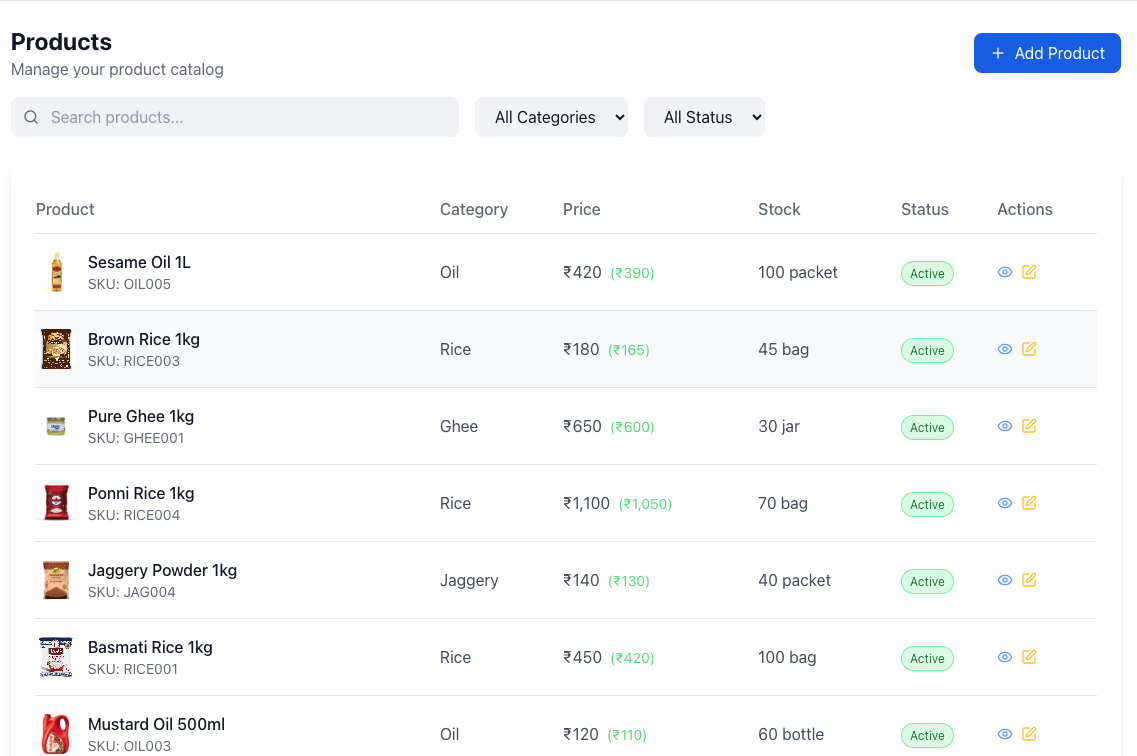
WhatsApp Bot with AI Dashboard
Enterprise-grade AI-powered e-commerce management solution enabling seamless WhatsApp shopping with intelligent automation and comprehensive analytics.
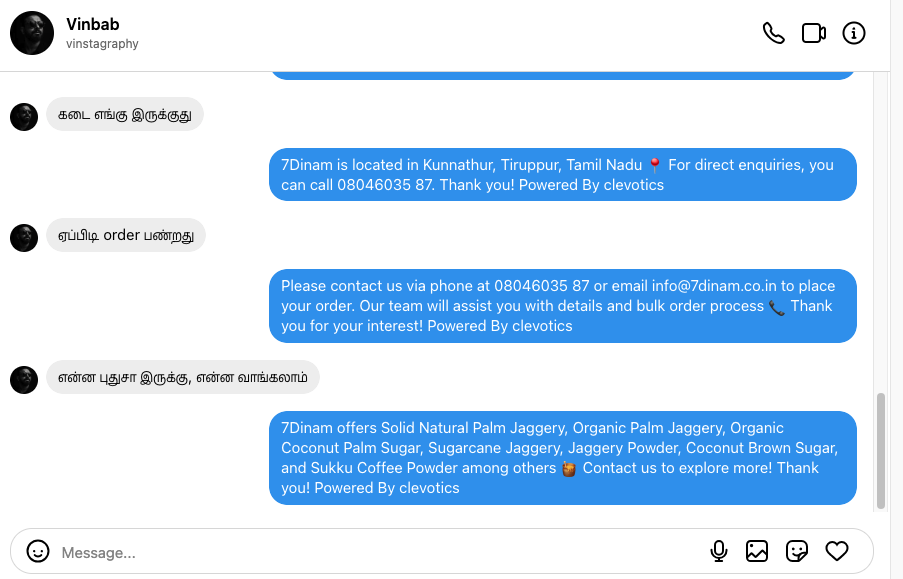
Instagram AI Bot for E-commerce
An intelligent Instagram automation bot powered by AI that provides 24/7 customer support for e-commerce sellers, handling product inquiries, availability checks, company information, and contact details through automated responses.
Frequently asked questions
What is agentic AI automation?
Agentic AI automation uses AI agents that understand a goal, decide the steps to reach it, and take action across your tools on their own - instead of following a fixed script. It handles context and edge cases the way a trained team member would, which is what separates it from traditional RPA and rule-based bots.
What is multi-agent orchestration?
Multi-agent orchestration is a model where a primary orchestrator agent directs several specialist agents working in parallel, mirroring how a manager coordinates a team. It lets complex work exceed what any single AI model can hold in context, and it is the dominant pattern for enterprise AI automation in 2026.
What is MCP and why does it matter for automation?
MCP (Model Context Protocol) is the standard that lets AI agents connect to your existing tools - CRM, help desk, database, payments - to read data and take action. Often called the USB-C of AI, it means agents plug into your stack instead of needing custom one-off integrations for every system.
How is this different from RPA or a normal chatbot?
RPA follows a fixed sequence and breaks when a screen or field changes; a basic chatbot answers from a script. Agentic AI reasons about intent, decides what to do next, adapts when the workflow shifts, and acts across tools - so it survives change and handles cases the rules never anticipated.
How do you keep AI agents safe and under control?
We design bounded autonomy: agents operate within defined limits, with approval gates for sensitive actions, full audit trails, and human-in-the-loop checkpoints. Governance is built into the architecture from the first day, not added after deployment.
Why do so many AI agent pilots fail to reach production?
Most pilots stall because they are never evaluated against real cases, have no governance, and are not built for the systems they need to touch. We build against your real data, connect through MCP, and design oversight in - which is why roughly 9 in 10 of our agent builds reach production.
Ready to automate with agents that reach production?
Start with a free ROI assessment. We will map where agentic AI pays off first and what it takes to ship it into your operations.